
- DR-Singh-Harjinder-DDS-Admin
- 26 Feb, 2026
- 0 Comments
- 5 Mins Read
Healing After a Tooth Is Removed
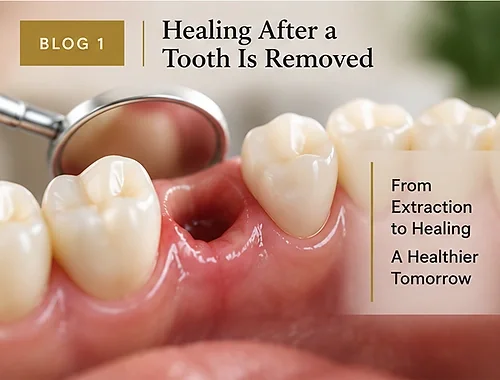
Tooth Extraction Recovery Guide
Healing After a Tooth Is Removed
Having a tooth removed is only the beginning of the healing process. What you do afterward can help protect the extraction site, make recovery more manageable, and help you recognize when something deserves a call to your dentist.
This guide covers recovery after a non-wisdom tooth extraction. Wisdom-tooth surgery can involve different recovery considerations and should follow the instructions provided for that procedure.
The Main Recovery Priorities
Protect the Clot
A blood clot normally forms in the socket and protects the underlying bone and nerves while early healing begins.
Keep Things Gentle
Avoid unnecessary disturbance of the extraction site while following your dentist’s directions for eating, cleaning, activity and medication.
Watch the Trend
Recovery differs from person to person. Pay attention to whether symptoms are generally improving rather than trying to match an exact online timeline.
Why the Blood Clot Matters
After a tooth is removed, a blood clot normally forms in the empty socket. That clot is an important early part of healing because it covers and protects the bone and nerves underneath while new tissue develops.
For that reason, much of early tooth extraction aftercare is about leaving the area alone and avoiding unnecessary disruption.
Your dentist may give instructions about gauze, rinsing, brushing, eating, physical activity and medications. Follow those instructions even if they differ from general advice you find online, because the appropriate approach can depend on the tooth removed, the difficulty of the procedure, your health and other factors.
The First Day: Protect the Extraction Site
Some blood mixed with saliva, tenderness and swelling can occur after an extraction. The exact amount varies according to the procedure and the individual.
During early healing
- Avoid repeatedly checking the socket with your tongue or fingers.
- Avoid vigorous rinsing and forceful spitting unless your dentist instructs otherwise.
- Avoid suction that may disturb the clot, including drinking through a straw when your dentist has advised against it.
- Take it easy and follow procedure-specific directions about exercise, lifting and strenuous activity.
- If your mouth is still numb, eat carefully so you do not accidentally bite your cheek, lip or tongue.
What Can You Eat After an Extraction?
Soft foods are generally easier to manage during the early stage of tooth extraction recovery.
Often Easier Early On
- Yogurt
- Eggs
- Mashed potatoes
- Soft pasta
- Soup that is not excessively hot
- Applesauce and similar soft foods
Use More Caution With
- Hard foods
- Crunchy foods
- Sharp foods that can irritate the area
- Foods that easily become trapped around a healing socket
When possible, chewing away from the healing site may also be more comfortable. As the area becomes easier to manage, foods can usually be reintroduced gradually according to your dentist’s instructions.
Keeping Your Mouth Clean While It Heals
Good oral hygiene still matters after an extraction, but the healing socket needs gentle treatment.
Continue caring for the rest of your teeth while avoiding aggressive brushing directly over the fresh extraction site until your dentist says it is appropriate. When rinsing is permitted, it should be gentle rather than forceful.
Your own postoperative directions come first. Different professional instructions may recommend somewhat different timing for rinsing and other aftercare steps. The treatment team that knows your procedure should guide the details.
If you were prescribed medication, use it exactly as directed. Do not start, stop or alter a prescribed medicine based solely on general online recovery information.
What Is Dry Socket?
Dry socket, also called alveolar osteitis, can occur when the protective blood clot does not form properly, is lost or breaks down before the socket has adequately healed. The exposed area can become quite painful.
A healing socket can change appearance as tissue develops, so appearance alone is not the most useful way to judge recovery.
Symptoms that deserve a call
Dry-socket pain commonly becomes severe or worsens during the first few days after extraction and may radiate toward the ear, temple, eye or neck on the affected side. A bad taste or odor can also occur.
If pain becomes substantially worse instead of gradually improving, contact the dentist who performed the extraction rather than trying to diagnose or treat the socket yourself.
Dry socket information: American Dental Association MouthHealthy
Smoking, Vaping and Healing
Smoking is associated with delayed healing and a greater risk of dry socket after tooth removal. Suction associated with smoking can also disturb the clot, while tobacco exposure can interfere with healing.
Vaping also deserves caution during oral-surgical recovery. Follow the instructions given for your particular procedure and ask the practice if you are unsure what applies to you.
Because smoking, vaping and nicotine can affect several types of oral surgery, they deserve more detailed discussion than can be covered in a general recovery guide.
When Should You Call Your Dentist?
Recovery is not identical for everyone, so the goal is not to compare yourself to a rigid day-by-day schedule. What matters is whether symptoms are generally moving in the right direction.
Contact your dental provider if you develop:
- Severe or increasing pain
- Bleeding that does not settle as instructed
- Worsening swelling
- Fever
- Pus or concerning drainage
- A persistent foul taste or odor
- Another symptom that worries you
Difficulty breathing or swallowing requires urgent medical attention.
It is better to have an unexpected change evaluated than to assume every symptom is simply part of normal healing.
Follow-Up After an Extraction in Yuba City
For patients treated by Dr. Harjinder Singh in Yuba City, postoperative care does not necessarily end when you leave the office. The practice normally performs a follow-up check approximately one week after surgical treatment, and patients with healing concerns can call the office or return for a check.
Recent surgical patients may also be able to reach Dr. Singh through the office phone when it is forwarded after hours. This postoperative access should not be interpreted as a general 24-hour emergency dental service.
Give the Site Time to Heal
A healing extraction site can feel unfamiliar and look different from day to day. Protecting the clot, keeping the rest of your mouth clean, choosing manageable foods and following the instructions provided for your procedure are more useful than trying to make recovery match an exact online timeline.