
Patient Resource · Parent & Teen Planning
Wisdom Teeth Removal for Teenagers: A Parent’s Guide
If a dentist or orthodontist has suggested a wisdom-tooth evaluation for your teenager, the first question is not “What age should they be removed?” It is what do the teeth, symptoms and images show for this teenager?
At Harjinder Singh DDS, Inc., core procedural patients are treated from age 14 and older. Age 14 is a practice-eligibility threshold—not a diagnosis and not a reason, by itself, to remove wisdom teeth.
What 14+ means here
Eligible to be evaluated here does not mean “should be removed now”
Wisdom teeth usually develop and erupt over a span of years. Some are healthy and maintainable; others are impacted, difficult to clean, painful, diseased or positioned in a way that deserves closer evaluation. The treatment decision should come from the clinical picture—not a fixed age rule.
This age statement applies to this procedure-focused practice’s core care. It does not mean routine pediatric dentistry is offered.
The decision before the procedure
A useful evaluation answers more than “are the wisdom teeth there?”
A parent needs to understand what is happening now, what might reasonably be monitored, and what findings make treatment worth discussing. Those answers can differ even between teenagers of the same age.
evaluation
impaction
disease
structures
Symptoms
Pain, swelling, recurrent gum problems, unpleasant taste, difficulty opening the mouth or other symptoms can change the urgency of an evaluation. Lack of pain does not automatically prove that a wisdom tooth is healthy.
Eruption and impaction
A tooth may be fully erupted, partly erupted or still within the jaw. Position and available space can affect whether it is maintainable and whether nearby teeth or tissues are at risk.
Imaging
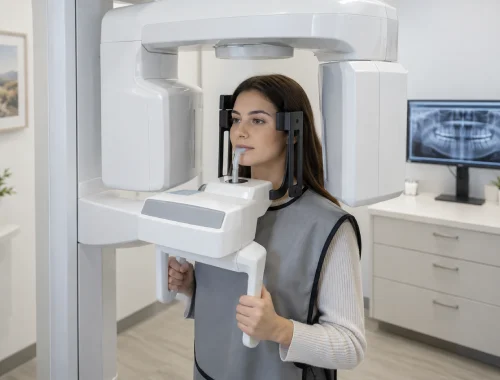
X-rays help show development, angle, position and surrounding anatomy. Dr. Singh uses 3D imaging selectively when additional detail is clinically useful; it is not automatic for every wisdom-tooth patient.
Health and maintainability
Cavities, gum disease, infection, pathology, damage to an adjacent tooth and whether the area can be kept clean are among the issues that can influence a recommendation.
Current AAOMS patient guidance likewise describes management as patient-specific: some healthy, functional wisdom teeth may be retained and monitored, while disease or higher-risk findings can support removal. See the AAOMS Wisdom Teeth Management resource.
When another dentist sends you
A referral is a reason to evaluate—not proof that surgery is already decided
A general dentist or orthodontist may notice the third molars on an exam or X-ray and recommend a focused evaluation. Ask what they saw and, if images already exist, arrange to have them available for review.
If the concern is specifically that a lower wisdom tooth appears close to a nerve, that question has its own detailed resource rather than being repeated here.
Read: Wisdom Tooth Close to a NerveUseful information to bring
- Recent dental or orthodontic X-rays, if available
- The reason the referring dentist or orthodontist gave for the evaluation
- Your teenager’s current medications, medical history and allergies
- Any prior anesthesia, sedation or difficult-numbing history
- Symptoms your teenager has noticed—and how long they have been present
- Your family’s questions about timing, school, sports, recovery and cost
One, two, three or four?
“Should all four come out at once?” is an individual treatment question
Not everyone has four wisdom teeth, and not every wisdom tooth necessarily requires removal. The useful question is which teeth are actually indicated for treatment and whether combining indicated treatment is appropriate.
When multiple wisdom teeth are indicated for removal and it is medically appropriate, Dr. Singh generally prefers to treat the indicated teeth during the same appointment rather than split treatment unnecessarily across multiple visits.
That is not a rule that every teenager needs four wisdom teeth removed.
Planning around real life
Choose the date after you understand the anesthesia plan and expected recovery
School breaks can be convenient, but convenience should not replace clinical timing. Build the family plan around the procedure your teenager actually needs and the instructions the office gives for that case.
01
Before treatment
Review the medical history, medications, anesthesia options and any pre-procedure instructions. If sedation is planned, follow the office’s exact food, drink and medication directions.
02
Transportation & supervision
Confirm in advance who will bring your teenager, drive them home when required by the anesthesia plan and stay available during the early recovery period.
03
School, work & sports
Leave room for recovery instead of promising a fixed return date. Strenuous activity and sports should resume according to the treating dentist’s postoperative guidance and how recovery is progressing.
04
Home setup
Have the written instructions, suitable foods and fluids, a comfortable rest area, and the office contact information ready before the procedure rather than trying to organize everything afterward.
Need the anesthesia details?
Go to Sedation DentistryLocal anesthesia, nitrous oxide, oral sedation and moderate-conscious/IV sedation are separate topics. Candidacy and preparation are individualized.
Need the day-by-day recovery guidance?
Go to Wisdom Teeth Recovery & AftercareThe recovery page owns detailed postoperative guidance so this parent guide does not repeat it.
A parent’s home-prep list
Prepare for the instructions you will receive—not for a generic internet recovery
Your teenager’s procedure, anesthesia plan and healing can differ from someone else’s. The practice’s specific instructions should take priority over online tips.
- ✓Save the office number.
Make it easy for the responsible adult to reach the practice if a postoperative concern arises.
- ✓Have appropriate foods and fluids available.
Use the food guidance provided for your teenager’s procedure and recovery stage.
- ✓Plan the first recovery period.
Avoid stacking the procedure immediately before an important school, travel or athletic commitment.
- ✓Know who is supervising.
Make transportation and responsible-adult arrangements before the day of treatment.
- ✓Keep the written instructions visible.
Do not rely on memory when your family gets home after a procedure.
Insurance & access
Separate the clinical decision from the coverage question
First understand what is recommended and why. Then confirm authorization, benefits and out-of-pocket items with the office and plan. Coverage rules can change, which is why this guide sends those questions to the pages that own them.
Bring both voices to the consultation
Questions the parent and teenager should ask together
A good consultation should leave the teenager—not only the parent—understanding what was found, what is being recommended and what happens next.
What specifically on the exam or X-ray makes you recommend treatment now—or monitoring instead?
Which wisdom teeth are involved, and does each one have the same reason for treatment?
Is any lower wisdom tooth close enough to a nerve that additional imaging or a different discussion is needed?
If more than one tooth is indicated, what are the reasons to treat them together or separately?
Which anesthesia or sedation option is being considered, and what does that change about eating, medications, driving and supervision?
What should we realistically plan around school, work, sports or travel?
What fees or adjuncts may be outside insurance coverage, and what needs authorization first?
Which written instructions should we follow before and after the procedure, and who should we call if recovery changes?
A useful future video from Dr. Singh
“What I want parents and teenagers to understand before wisdom-tooth treatment”
A short first-party explanation could make this page even more useful: why age is not the indication, what Dr. Singh looks for on imaging, how the “all four” decision is made, and what a family should plan before treatment.
Family briefing
Four topics worth hearing directly from the treating dentist
- Why your teenager is being evaluated
- What the X-ray changes
- Why the number of teeth treated can differ
- How to plan the day and recovery period
Continue with the page that matches your next question
Keep the detailed topics in their right place
External patient education
Authoritative reading used for the general guidance on this page
These independent sources support the general educational layer. Dr. Singh-specific practice details on this page come from the practice’s confirmed project information.